

The execution layer for agents.
Your agent writes the code. Nace does the grunt work around it: reading files, sorting, and making the small calls. It runs on fast, cheap models.
 Hugging Face
Works with
Leading performance at a fraction of the cost.
Decision Index
Public, chance-corrected · Higher is better
67.6
+6.9 vs Jev 1.14
Highest of 5 scored
- Drex Max: 67.6
- Drex 2.0: 61.3
- Jev 1.14: 60.7
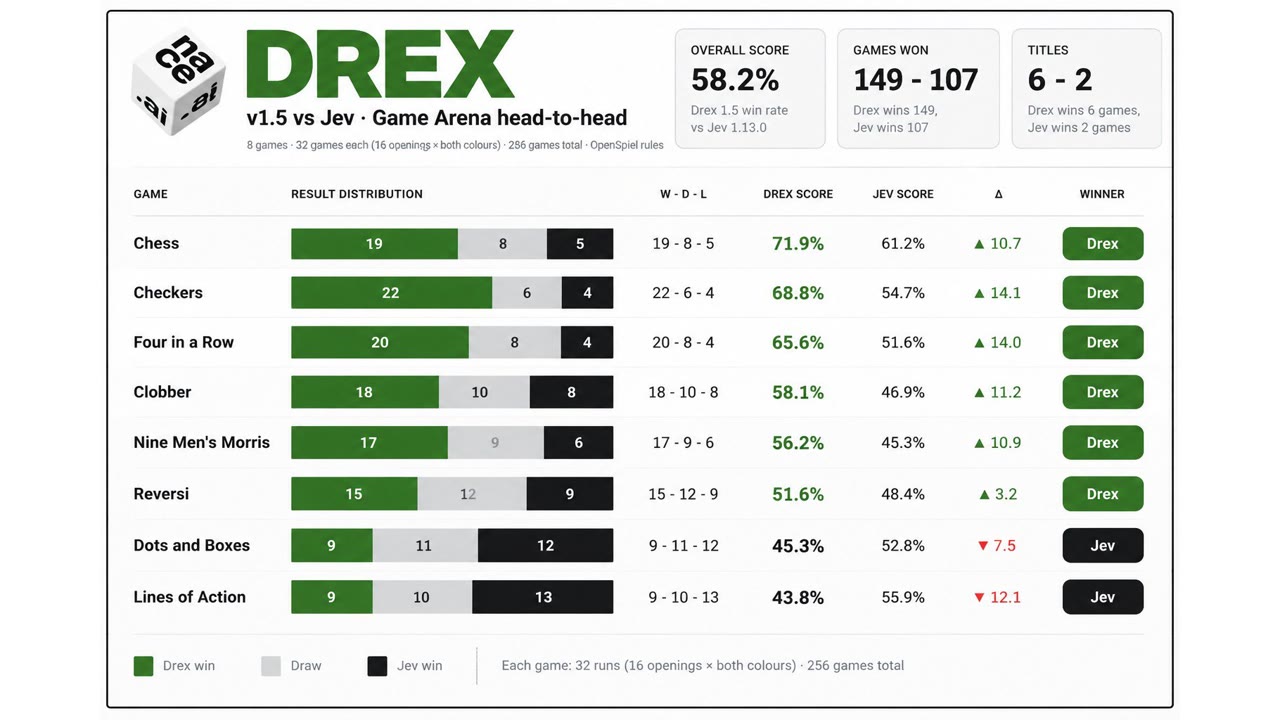
- Drex 1.5: 58.1
- GPT-6 Luna Decisions: 47.8
Median API latency
Per decision · Lower is better
183 ms
Through the API, as the caller sees it
Jev 1.14: 196 ms
- Drex 1.5: 145 ms
- Drex 2.0: 151 ms
- Drex Max: 183 ms
- Jev 1.14: 196 ms
- GPT-6 Luna Decisions: 326 ms
- GPT-6 Sol: ~2.0 s
- Claude Opus 5.5: ~3.5 s
Cost per 1,000 decisions
USD · Lower is better
$0.06
1.4× the cost
Jev 1.14: $0.042
- Drex 1.5: $0.04
- Jev 1.14: $0.042
- Drex Max: $0.06
- Drex 2.0: $0.06
- GPT-6 Luna Decisions: $0.10
- GPT-6 Sol: $3.33
- Claude Opus 5.5: $10.17
Public benchmarks. Latency is the median API time per decision, as the caller sees it, network included; ~ marks an approximate figure. Bars start at zero.
Builders on Drex and NDI, in their words.
- VVishesh Baghel@VisheshBaghell · Sep 25
$499,235 of unbilled work across 1000 work orders. @NaceAI's drex found $482,260.
drex reads the note and the invoice and flags what's missing. code does the math. when drex isn't sure, a human decides.
- AAakash Kanojiya@Kanojiyaaakash1 · Oct 8
I threw a messy PDF at Nace's new Document Intelligence model.
Instead of just converting the PDF into plain text, NDI is built to understand the document's structure, extract useful information, and connect every extracted value back to its original source.
It's a perception layer built specifically for AI agents.
- IIsrafil@Israfilv2 · Sep 30
Nace shows Drex playing a strategy game. i gave it a harder opponent: my timeline
Spoiler Guard sends each post to the new decision model and blurs the spoilers, 352 post checked in one session with sub-second calls
- DDean W. Perkins@deanwperkins · Oct 6
someone wired a small open model to a real security camera
389 ms per call
the vision model sees, drex decides
- IIvan Fioravanti@ivanfioravanti · Sep 25
Drex: faster, cheaper, better than jev, 32k context and with open weights coming soon? I will surely give it a try!
- SSuperSaiyanColtSep 26
I’m using Drex as a fast decision layer inside my project Elyreon/NOVA mainly for routing tasks, choosing tools/models, classifying failures, retries, urgency, and handoffs.
the bot already responds sub 1s so i cant imagine how much better drex will make it
- EEduardo OrdaxSep 25
Using a massive LLM to decide which tool to call feels like hiring a CEO to sort your inbox.
Drex targets those decisions: routing, ranking, classification and guardrails.
- AahmadghoOct 7
i was using jev for playing vs a bot in an old game called Little fighter 2
drex 1.5 is actually very comparable with jev's behaviour in game infact might be better
also it's less latent and very fast i've dropped jev eversince and been optimizing for drex
- NNawi@Aria_Nawi · Oct 8
Earnings day is chaos. One filing, a mountain of invoices and a feed of X posts. One agent read all of it
@NaceAI Document Intelligence read all three, and every value it pulls links back to where it sits
the part I'd watch: when there isn't enough data, Drex says "insufficient data" instead of guessing
- KKai@hqmank · Sep 25
Switching was easy. I pointed my existing Jev setup at Drex, kept the same SDK, changed 3 environment variables, and it worked.
I see a good fit for agent routing, tool selection, document classification, and choosing the next action in browser automation.
- MMAX@MAXdeg0 · Oct 8
i built a full NDI 1.0 trading system and open-sourced the entire repo.
NDI extracts the information, grounds it back to the original source, then evaluates the decision while a frontier model reasons over the context.
market data + financial documents + AI reasoning → trading decision.
- GGipp@gippp69 · Sep 30
128k context means it can route with real state instead of tiny summaries.
the interesting part isn’t more generation. it’s better decisions before generation starts.
Watch an agent run the workflow.
An agent with a Nace key reads an AP packet, finds the page that matters and decides what to do with it. Every call in the window is a Nace endpoint, and every value comes back with the page it was read from.

$ export NACE_API_KEY="nace_sk_…"
$ claude
> This AP packet from Halden Supply mixes invoices, a contract amendment and a W-9. Which invoice can we pay today, and did the terms change?
console · split(file: "halden-packet.pdf")
38 pages → 5 documents
1 Invoice INV-2291 p. 1–3
2 Invoice INV-2304 p. 4–6
3 Contract amendment No. 3 p. 7–19
4 W-9 p. 20
5 Purchase order PO-77120 p. 21–38
console · classify(document: 3, classes: "procurement")
contract_amendment · 0.97
console · extract(document: 3, schema: { payment_terms, effective_date, parties })
payment_terms "Net 45, 2% discount within 10 days" found
effective_date "2026-10-01" found
parties Halden Supply Co., Meridian Logistics found
console · ground(document: 3, text: "Net 45")
page 11 · box 0.12 0.41 0.88 0.47 · exact · 0.99
console · extract(documents: [1, 2], schema: { invoice_no, total, payment_terms, po_number })
INV-2291 $18,420.00 "Net 30" PO-77120 p. 2
INV-2304 $9,870.00 "Net 45" PO-77120 p. 5
console · systemone(state: "INV-2304 · $9,870.00 · Net 45 · matches PO-77120 · terms per amendment No. 3", questions: { approve: noul, route: choice })
approve noul 0.93
route payments 0.88 · review 0.09 · reject 0.03
Pay INV-2304 today: $9,870.00 against PO-77120 on Net 45, the terms Contract amendment No. 3 sets on page 11, effective 1 October 2026. Drex puts 93% on approving it and routes it to payments.
Hold INV-2291. It still carries Net 30 on page 2, which predates the amendment. Want me to flag it for AP review?
Why now
After the code, the run.
Code generation was the last wave. Workflow execution is the next. Once the code exists, it has to run: call tools, read files, classify, decide and reason, thousands of times a day. Paying a frontier LLM for every one of those steps is slow and expensive. That is where Nace sits.
The last wave
Code generation
Large models write the code, the tests and the pull request.
The next waveNace runs here
Workflow execution
The code calls tools, reads files and makes decisions, step after step, in production.
Two layers, one key
Perception and Decision.
Two layers your agent calls instead of a frontier LLM. Each one is a small model built for one job, and both sit behind the same key.
01 · PerceptionExample NDI extraction with its source Invoice 2023T210
Bookkeeping 600.00
Total 600.00/totalp. 1 · box 0.62 0.81 0.94 0.85
NDI
Every answer brings receipts.
Reads 36 file types, from scans to spreadsheets, email and video. Parse, split, classify, extract and ground, and every value points back to the page it came from.
Explore NDI02 · DecisionExample Drex decision: one invoice, three options INV-2304 · $9,870.00 · matches PO-77120
- approve0.93
- review0.05
- reject0.02
one pass
Drex
Odds, not opinions.
A calibrated probability on every option in one pass, in under 200 ms. Drex Max decides from screens, images and video.
Explore Drex
Frontier · Drex Max
Reads the screen and picks the next click, fast.
Drex Max is the frontier of the Drex family. Give it a screenshot and the question, and it puts a probability on every element your agent could click. Built for computer use and browser use, and it understands video too.
- Computer use
- Browser use
- Video understanding

- Invoice
- INV-88214
- Amount
- $16,920.00
- PO match
- 1,200 units
- Computer use
- 0.780On OSWorld-Verified, the benchmark of real tasks across desktop apps.
- Browser use
- 88.6On Mind2Web, the benchmark for picking the right element on a page.
- Every step
- <200 msMedian API time per decision, from text or a screenshot. Fast enough for every step of the loop.
One key, everywhere.
Console is plain HTTPS and JSON behind one nace_sk_ key. Any harness that can call a tool can call it; these are the ones we test with.
- 01
Create a key
Sign up in Console. A new account starts with $25 of credit.
- 02
Add Nace to your agent
One command gives your coding agent every layer as a tool.
claude mcp add nace -- uvx nace-mcp - 03
Call any layer
One header, one credit balance and one error envelope for Perception and Decision.
Authorization: Bearer $NACE_API_KEY
Works where your agent works
- CodexCodex calls the same endpoints from its sandbox; the key travels as one environment variable.
- CursorWire Console into Cursor's agent so a document question is answered inside the editor.
- Claude CodeGive Claude Code a Console key and it splits, extracts and decides from the terminal.
- pipi's minimal harness fits Console's minimal contract: JSON in, probabilities and locations out.
- HermesHermes agents read files and route decisions through Console without a second integration.
- opencodeopencode reaches Console over plain HTTPS; no plugin to install, nothing to keep in sync.
One platform. Four boundaries.
Same models, same API, same serving stack at every tier. The only thing that changes is the boundary around your data, from our cloud to your metal.
Your data trains your models. The weights, adapters and eval sets stay yours, inside the boundary you pick.

- Where it runs
- Our cloud
- Network path
- Public TLS
- GPU tenancy
- Shared
- Updates
- Continuous
Managed Cloud
Start on our GPUs, behind our API, with a key from Console.
- Shared GPU pool with strict tenant isolation
- Public API over TLS, no training on your data
- Usage-based pricing, no infrastructure to run
For: pilots, evaluations, mid-market teams moving fast.

- Where it runs
- Our cloud
- Network path
- Private link
- GPU tenancy
- Dedicated
- Updates
- Continuous
Dedicated Cloud
Your own GPU cluster in our cloud, reached over private links instead of the public internet.
- Single-tenant compute, pinned to your region
- PrivateLink or VPC peering into your network
- Customer-managed keys, dedicated throughput
For: regulated teams that are cloud-first but done with shared infrastructure.

- Where it runs
- Your cloud account
- Network path
- Inside your VPC
- GPU tenancy
- Dedicated
- Updates
- Pull from registry
Your Cloud
The platform installs inside your AWS or Azure account. Data stays within your boundary.
- Runs in your VPC with your keys, your logs, your IAM
- Updates pull from our registry; nothing flows back out
- The deployment model our audit and banking customers run in production
For: banks, Big 4 firms, anyone whose security review starts with “show us the network diagram.”
Talk to sales
- Where it runs
- Your datacenter
- Network path
- None
- GPU tenancy
- Dedicated
- Updates
- Signed offline bundles
On-Prem & Air-Gapped
Your datacenter, your hardware, zero outbound.
- No egress, no telemetry, offline license activation
- Signed offline update bundles on your schedule
- Ships as software on your servers or as a pre-configured appliance
For: government, defense, and sovereign environments where the network cable isn’t there.
Talk to sales
Questions
First request today. Your own cloud when you need it.
Create a key in Console and send your first request in a minute. When the data cannot leave your network, we bring the platform inside it.
Are you an agent? Read this page as Markdown